
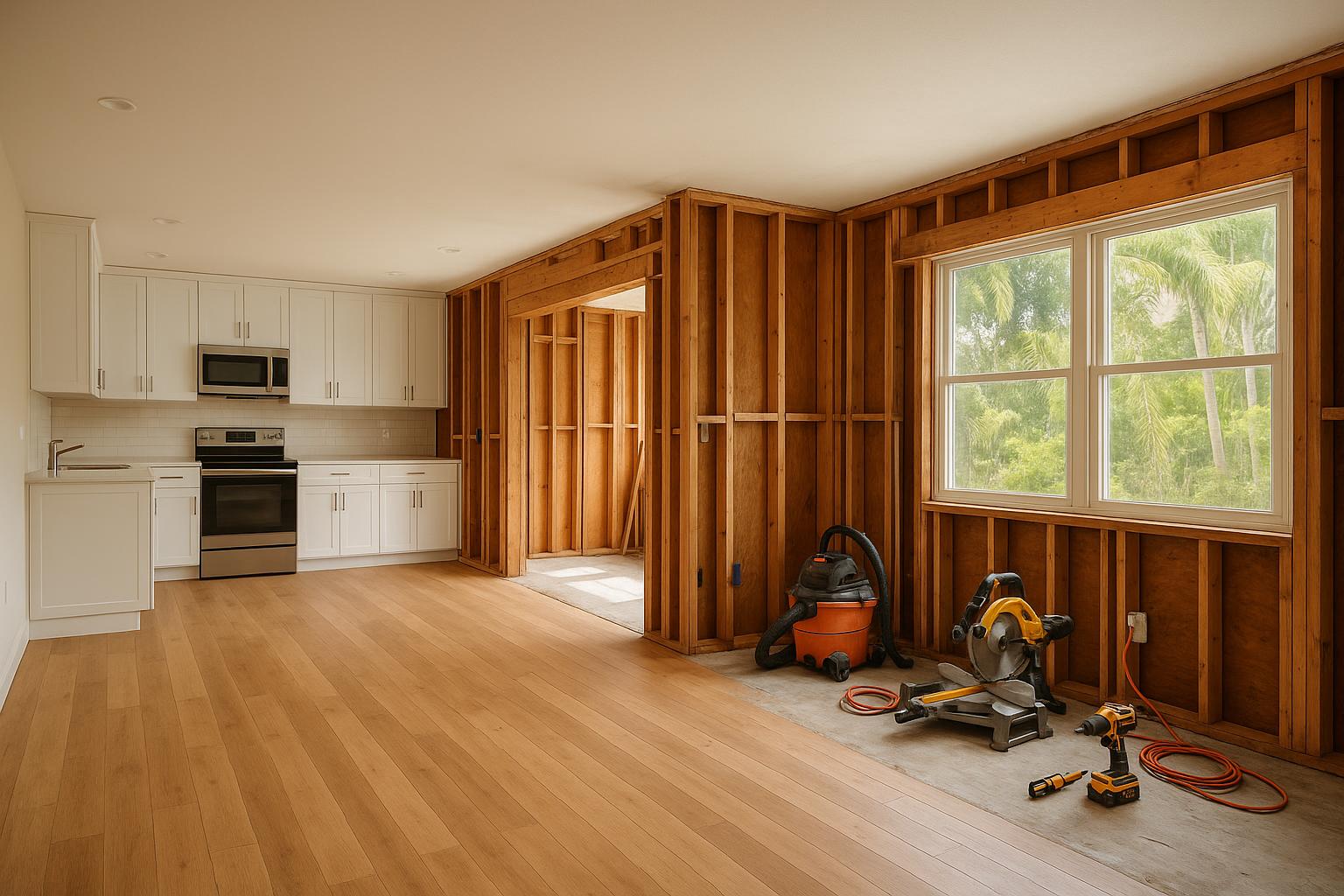
Why Whole-Home Renovations Require a Different Approach
Updating a single bathroom is one thing. Renovating your entire home — kitchens, bathrooms, flooring, paint, and everything in between — is a completely different animal. When multiple rooms are being transformed at the same time, the logistics get complicated fast. Where do you cook when the kitchen is torn apart? Where do you sleep when the master bedroom floor is being replaced?
For homeowners in Pompano Beach, whole-home renovations are increasingly common. Many of the homes in our area were built in the 1970s and 1980s, and while the bones are solid, the interiors need serious updating. Rather than tackling one room at a time over several years, more families are choosing to do everything at once — and with the right plan, that's actually the smarter move.
At Home Remodeling Wellington, we've guided dozens of homeowners through full-scale renovations. Here's the planning framework we recommend to keep things running smoothly from demolition day to the final walkthrough.
Step 1: Define Your Priorities Before You Pick Up a Hammer
Before you call a contractor or browse Pinterest, sit down and answer a few honest questions:
- What bothers you most about your current home? Outdated kitchen? Cramped bathrooms? Worn-out flooring throughout?
- How long do you plan to stay? If you're renovating to sell within two years, your choices will differ from a forever-home remodel.
- What's your realistic budget? Not the dream number — the real number you can comfortably spend.
Ranking your priorities helps when tough decisions come up later. And they always come up. If the kitchen is your top priority and the guest bathroom is at the bottom, you'll know where to splurge and where to save when the budget gets tight.
Step 2: Set a Realistic Budget (Then Add a Cushion)
The number one source of stress in any renovation is money. Here's the truth that experienced contractors will tell you: unexpected costs are not a possibility — they're a certainty. Behind walls, you might find outdated wiring, water damage, or plumbing that doesn't meet current code.
Our recommendation is to set aside 15 to 20 percent of your total budget as a contingency fund. If your renovation budget is $80,000, that means keeping $12,000 to $16,000 in reserve. If you don't end up needing it, great — you can put it toward an upgrade or keep it in the bank.
For Pompano Beach homeowners, material costs can vary depending on the season and supply chain conditions. Getting detailed quotes early and locking in material selections helps prevent budget surprises down the road.
Step 3: Create a Phasing Plan
A whole-home renovation doesn't mean every room gets demolished on the same day. Smart phasing is the key to maintaining some level of livability during the project. Here's a common phasing approach we use:
- Phase 1 — Structural and systems work: Electrical upgrades, plumbing rough-ins, any wall modifications. This is the messy, disruptive phase.
- Phase 2 — Kitchen and bathrooms: These are the most complex rooms with the most trades involved (plumbing, electrical, tile, cabinetry, countertops).
- Phase 3 — Flooring installation: Once the heavy construction is done, new flooring goes in throughout the home.
- Phase 4 — Interior painting and finishing touches: Paint, trim, hardware, and final details come last to keep everything looking fresh.
This sequence minimizes rework. You don't want to install beautiful new floors only to have a plumber drag tools across them the following week.
Step 4: Make Material Selections Early
One of the biggest causes of renovation delays isn't labor — it's materials. Custom cabinetry can take six to eight weeks to arrive. Specialty tile might ship from overseas. Even popular countertop materials can have lead times that catch homeowners off guard.
We always encourage our clients to finalize their selections before demolition begins. That means choosing your:
- Cabinet style, color, and hardware
- Countertop material and edge profile
- Tile for bathrooms, backsplashes, and any custom tile work
- Flooring type and color
- Paint colors for every room
- Fixtures — faucets, lighting, showerheads, and door handles
Having everything selected and ordered ahead of time keeps the project moving without costly downtime while you wait for a backordered faucet.
Step 5: Plan Your Living Situation
Can you live in your home during a whole-home renovation? Sometimes yes, sometimes no. It depends on the scope of work and your tolerance for dust and disruption.
If you're staying in the home, here are some practical tips:
- Set up a temporary kitchen. A microwave, mini-fridge, and electric hot plate in a spare room or garage can get you through a few weeks without a functioning kitchen.
- Protect your belongings. Dust travels everywhere. Seal off rooms that aren't under construction with plastic sheeting.
- Communicate with your contractor daily. Know what's happening each day so you can plan around the noise and activity.
Some Pompano Beach homeowners choose to stay with family nearby or rent a short-term place during the most intensive phases. It adds cost, but it can significantly reduce stress — especially for families with young children or pets.
Step 6: Choose the Right Contractor
A whole-home renovation requires a contractor who can coordinate multiple trades seamlessly. You need someone who understands how the kitchen remodel connects to the flooring installation, how the bathroom plumbing affects the painting schedule, and how to keep everything moving in the right order.
When evaluating contractors, look for:
- Experience with multi-room projects — not just single-room remodels
- Clear, written estimates that break down costs by phase and room
- Strong communication habits — do they return calls? Do they explain things clearly?
- Local references from homeowners in Pompano Beach or surrounding communities like Fort Lauderdale, Deerfield Beach, or Coral Springs
- Proper licensing and insurance for work in Broward County
A good contractor will also be honest about timelines. If someone promises a full-home renovation in three weeks, that's a red flag. Quality work takes time, and a realistic schedule protects both your investment and your sanity.
Step 7: Expect the Unexpected — and Stay Flexible
Even with perfect planning, renovations have surprises. A wall you thought was non-structural turns out to be load-bearing. The tile you loved gets discontinued. A permit inspection requires an additional fix before you can move forward.
The homeowners who have the best renovation experiences are the ones who stay flexible and maintain open communication with their contractor. When something unexpected comes up, a quick conversation about options and costs keeps the project on track without spiraling into frustration.
Ready to Start Planning Your Renovation?
If you've been thinking about transforming your Pompano Beach home but feel overwhelmed by the scope of the project, you're not alone. Whole-home renovations are big undertakings, but with the right planning and the right team, they don't have to be stressful.
Home Remodeling Wellington specializes in helping homeowners navigate exactly this process — from the first priority list to the final coat of paint. Whether you're updating a 1980s ranch or modernizing a waterfront property, we bring honest craftsmanship and clear communication to every phase of your project. Reach out to us to start the conversation about bringing your vision to life.