
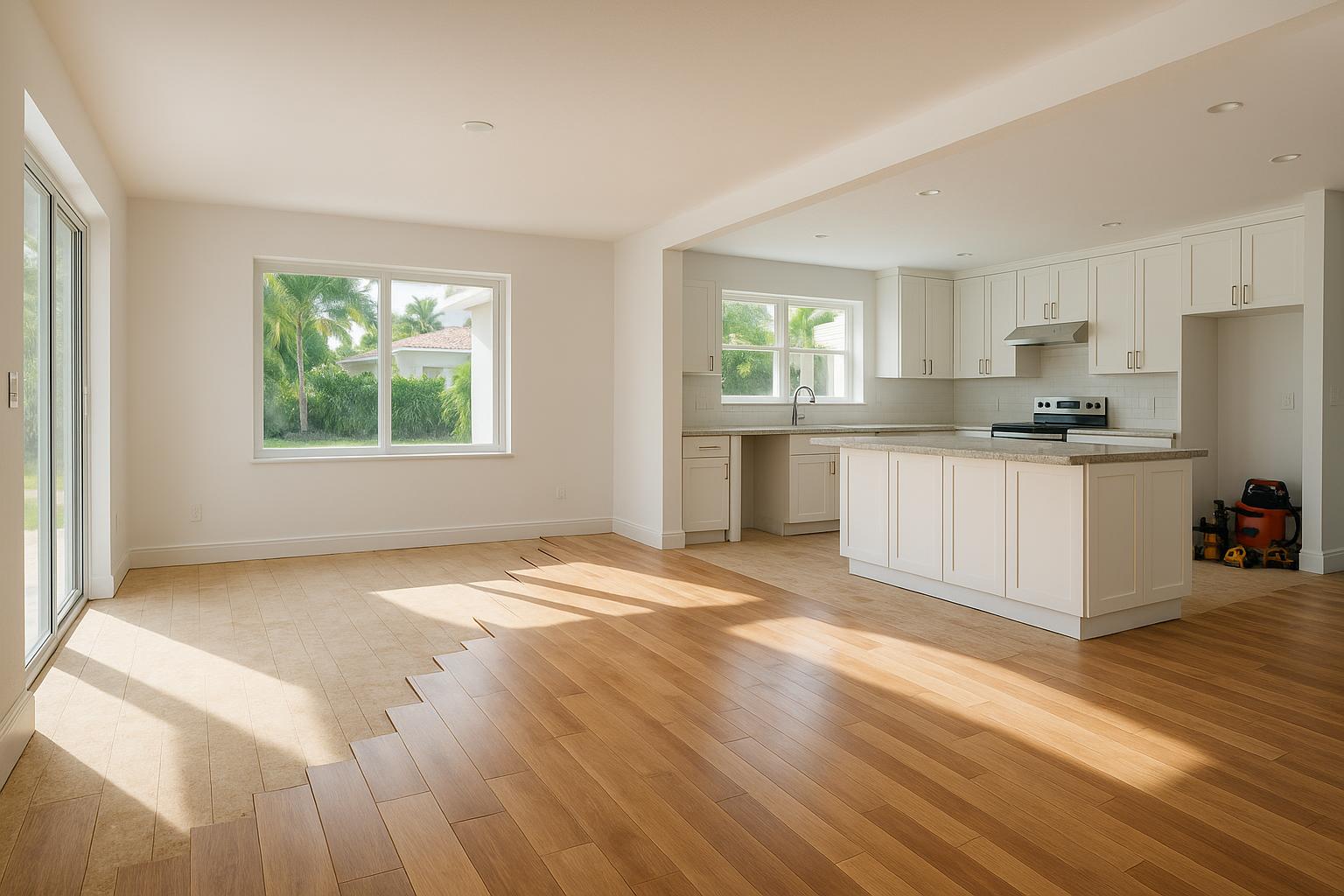
Why Whole-Home Renovations Require a Different Approach
Updating a single bathroom is one thing. Renovating your entire home — kitchens, bathrooms, flooring, paint, and everything in between — is a completely different undertaking. When multiple rooms are being remodeled simultaneously, the logistics get complicated fast. Materials need to be ordered in sequence, contractors need to coordinate schedules, and you still need a functioning place to live while the work happens.
For homeowners in Pompano Beach, whole-home renovations are increasingly popular. Many homes in the area were built in the 1970s and 1980s, and while the bones are solid, the interiors are overdue for a comprehensive refresh. Whether you've just purchased a fixer-upper near the beach or you've lived in your home for decades and want to modernize everything at once, a well-organized plan is the difference between a smooth project and a stressful nightmare.
Step 1: Define Your Priorities Before You Pick Up a Hammer
Before contacting any contractor, sit down and make a prioritized list of every space you want to renovate. Rank them from most important to least important. This exercise serves two purposes:
- Budget allocation: You'll know where to invest the most money and where you can afford to be more conservative.
- Phasing decisions: If your budget doesn't cover everything at once, you'll know which rooms to tackle first and which can wait for a second phase.
For most homeowners, the kitchen and primary bathroom top the list. These rooms have the biggest impact on daily life and home value. Flooring and interior painting often come next because they unify the look of the entire house. Custom tile work in entryways or secondary bathrooms can round out the project.
Step 2: Set a Realistic Budget (and Add a Cushion)
One of the biggest mistakes homeowners make is setting a budget based on best-case scenarios. In reality, whole-home renovations almost always uncover surprises — outdated plumbing behind bathroom walls, subfloor damage beneath old tile, or electrical wiring that doesn't meet current code.
A good rule of thumb is to set aside 15 to 20 percent of your total budget as a contingency fund. If you're planning to spend $80,000 on a full renovation, keep $12,000 to $16,000 in reserve. If you don't need it, great — you can put it toward an upgrade you originally cut from the plan. But if surprises arise, and in South Florida's older homes they often do, you won't be scrambling for funds mid-project.
Getting Accurate Estimates
Request detailed, itemized estimates rather than lump-sum quotes. When you can see the cost breakdown for demolition, materials, labor, and permits separately, it's much easier to make informed decisions about where to adjust spending. A reputable remodeling company will be transparent about these numbers.
Step 3: Establish a Logical Renovation Sequence
The order in which rooms are renovated matters more than most people realize. Here's a general sequence that minimizes disruption and prevents rework:
- Structural and mechanical work first: Any plumbing rerouting, electrical upgrades, or wall modifications should happen before cosmetic work begins.
- Kitchens and bathrooms: These are the most complex rooms with the longest lead times for cabinets, countertops, and fixtures. Starting them early keeps the overall timeline on track.
- Custom tile work: Tile installation in showers, backsplashes, and floors should happen after plumbing rough-ins are complete but before final fixtures are installed.
- Flooring installation: New flooring goes in after the heavy, messy work is done to avoid damage. The exception is if you're installing tile flooring in wet areas — that typically happens with the bathroom or kitchen phase.
- Interior painting: Paint is one of the last steps. Walls get scuffed and dinged during construction, so it makes sense to apply fresh paint after all other trades have finished their work.
- Final fixtures and details: Light fixtures, cabinet hardware, outlet covers, and trim pieces go in last.
This sequence isn't rigid — your contractor may adjust it based on your home's specific conditions — but it provides a solid framework that prevents costly do-overs.
Step 4: Plan for Where You'll Live During Construction
This is the part most homeowners underestimate. Living in a home during a full renovation is possible, but it requires planning. Here are a few strategies Pompano Beach homeowners have used successfully:
- Phase the work room by room so you always have a functioning kitchen or bathroom available.
- Set up a temporary kitchen with a microwave, mini fridge, and coffee maker in a room that isn't being touched yet.
- Seal off construction zones with plastic sheeting to contain dust. This is especially important in South Florida where running the air conditioning constantly means dust can circulate through the entire house.
- Consider staying elsewhere for the most disruptive week or two, particularly during demolition and flooring installation when noise and dust are at their peak.
Step 5: Communicate Clearly and Often With Your Remodeling Team
The number one complaint homeowners have about renovation projects isn't cost overruns or delays — it's poor communication. Not knowing what's happening in your own home is incredibly frustrating.
Before work begins, establish a communication plan with your contractor. Decide how often you'll receive updates, who your primary point of contact is, and how change orders will be handled. At Home Remodeling Wellington, we believe that clear, honest communication is just as important as the quality of the work itself. Homeowners should never have to chase their contractor for answers.
Handling Change Orders
Change orders — modifications to the original scope of work — are normal during whole-home renovations. Maybe you decide to upgrade your kitchen countertops after seeing the cabinets installed, or perhaps the contractor discovers a plumbing issue that requires rerouting a drain line. The key is to get every change order documented in writing with an agreed-upon cost before the work proceeds. This protects both you and your contractor.
Step 6: Think About the Big Picture, Not Just Individual Rooms
One advantage of renovating your entire home at once is the opportunity to create a cohesive design throughout. When you remodel room by room over several years, styles and materials can clash. A whole-home renovation lets you choose complementary flooring, consistent paint palettes, and coordinating fixtures that make your home feel intentional and unified.
Consider working with your remodeling team to select a core palette of materials — a primary flooring type, two or three paint colors, and a hardware finish — that carries through the entire house. This doesn't mean every room looks the same, but it creates visual flow that makes your home feel larger and more polished.
Your Pompano Beach Home Deserves a Thoughtful Renovation
A whole-home renovation is a significant investment of money, time, and energy. But when it's planned thoughtfully and executed by a team that values craftsmanship and communication, the result is a home that feels brand new — without having to move. If you're considering a comprehensive remodel of your Pompano Beach home, take the time to plan properly, choose your remodeling partner carefully, and don't skip the contingency fund. Your future self will thank you.